
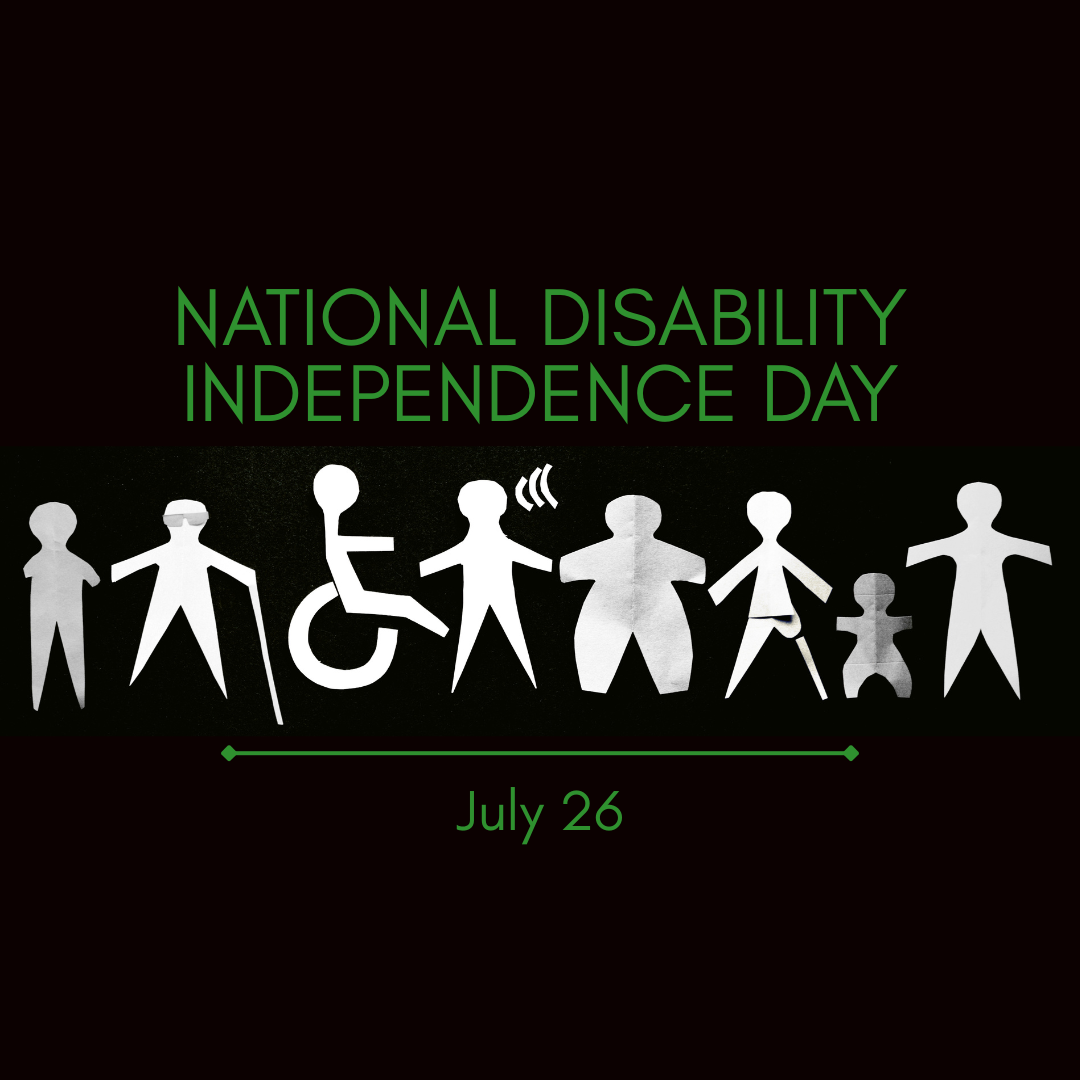
Accessibility Matters: Recognizing National Disability Independence Day
National Disability Independence Day recognizes the anniversary of the Americans with Disabilities Act and the profess it has helped make toward greater access, inclusion and opportunity.
National Disability Independence Day, July 26, commemorates the signing of the Americans with Disabilities Act, also known as the ADA, in 1990. This landmark civil rights law helps protect people with disabilities from discrimination and promotes equal access to employment, public services, transportation, education, and many other aspects of everyday life.
National Disability Independence Day is a time to reflect on the progress that has been made while recognizing that creating accessible and inclusive communities is an ongoing effort. The ADA has helped remove many physical and social barriers by establishing standards for accessibility and ensuring that individuals with disabilities have the opportunity to participate more fully in their workplaces and communities.
Disabilities can be visible or invisible, temporary or permanent. They may affect mobility, hearing, vision, learning, mental health, chronic health conditions or other aspects of daily life. Because every person's experience is different, fostering an inclusive environment begins with respect, understanding and a willingness to recognize the unique strengths and perspectives that each individual brings.
In the workplace, accessibility benefits everyone. From providing accessible technology to offering reasonable accommodations and creating an environment where employees feel comfortable asking for the support they need, inclusive practices help people do their best work. When barriers are reduced, individuals are better able to contribute their skills, ideas and talents.
National Disability Independence Day is also an opportunity to learn more about disability inclusion and to challenge assumptions that may unintentionally create barriers for others. Small actions, such as using respectful language, ensuring meetings and communications are accessible, and considering different needs when planning events, can make a meaningful difference.
As we recognize National Disability Independence Day, we celebrate the achievements of people with disabilities and reaffirm the importance of creating workplaces and communities where everyone has the opportunity to thrive. Some people in our history who have had a significant impact on disability awareness include:
Temple Grandin: A world-renowned animal scientist and autism spokesperson who revolutionized the livestock industry by designing humane handling systems. She utilized her own neurodivergent perspective to advocate for autism awareness and visual thinking.
Stevie Wonder: A legendary multi-instrumentalist and singer-songwriter who has won 25 Grammy Awards. He has been blind since shortly after birth and has used his platform to advocate for civil rights and the Americans with Disabilities Act (ADA).
John Nash: A brilliant mathematician and Nobel Laureate whose work in game theory transformed economics. He lived with schizophrenia, a condition depicted in the biographical film A Beautiful Mind.
Michael J. Fox: An Emmy Award-winning actor and author (famous for Back to the Future) who was diagnosed with young-onset Parkinson's disease at age 29. He established The Michael J. Fox Foundation for Parkinson's Research to aggressively fund research toward a cure.
Judith Heumann: Widely recognized as the "Mother of the Disability Rights Movement," she was a civil rights activist who contracted polio as a child. She used a wheelchair and spearheaded the protests that led to Section 504 of the Rehabilitation Act and the ADA.
Olympic Steel’s commitment to complying with the ADA and making our workplace inclusive is codified in section 3.10 of our employee handbook. Any employee with questions concerning accommodation should first review the relevant section of the handbook and its procedures, then reach out to the Corporate Human Resources Department.
Learn more:
