
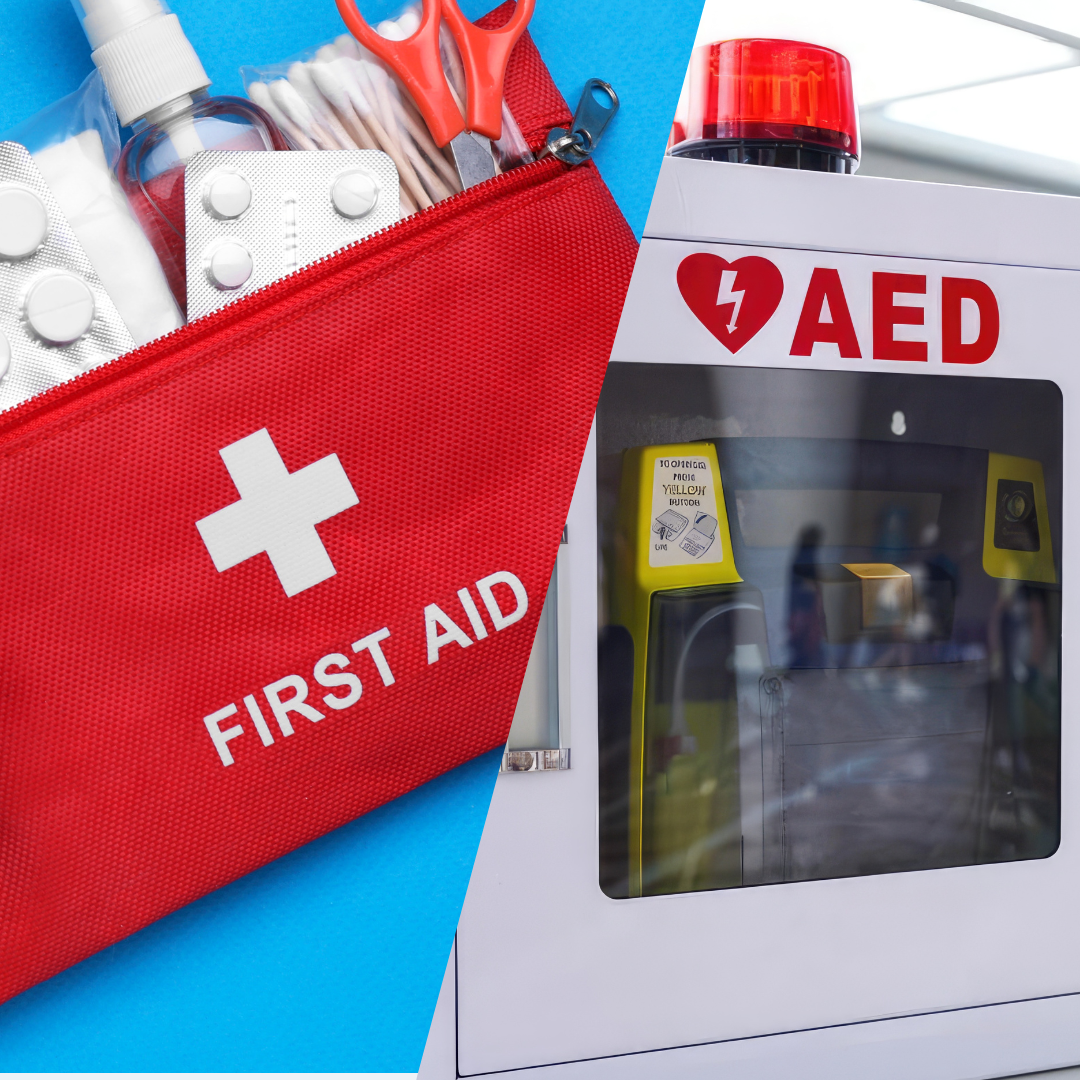
Be Prepared to Help Safely
Emergencies can happen without warning but knowing how to respond can help protect you and your coworkers. Learn the basics of first aid, CPR, AED use and bloodborne pathogen safety to help create a safer, more prepared workplace.
When an emergency happens in the workplace, every second counts. Whether someone experiences a medical emergency, suffers an injury, or is exposed to blood or other potentially infectious materials, knowing how to respond can make a significant difference. While emergency responders provide advanced care, employees who are trained in First Aid, CPR, AED use, and Bloodborne Pathogens awareness (we refer to these people as First Responders) can help stabilize a situation until professional help arrives.
FIRST AID
First Aid is often the first step in responding to a workplace injury. It involves providing immediate care for conditions such as cuts, burns, sprains or other injuries while waiting for additional medical treatment if needed. First aid materials are available to all employees and kept in a central location. Reach out to your Safety contact, if you don’t know where to find first aid items like bandages, burn ointment, eye wash station, and more.
In a manufacturing environment, taking quick action can help reduce the severity of an injury and prevent further harm. It is equally important to report all injuries promptly, even those that seem minor, so they can be properly evaluated and documented. We report all injuries to our S1 Medical to help us determine next steps.
CARDIOPULMONARY RESUSCITATION
Cardiopulmonary resuscitation, commonly known as CPR, is an emergency lifesaving technique used when a person's heart has stopped beating or they have stopped breathing. CPR helps circulate oxygenated blood to the brain and other vital organs until emergency medical personnel arrive. High quality CPR can greatly improve a person's chances of survival during a cardiac emergency.
AUTOMATED EXTERNAL DEFIBRILLATOR
An Automated External Defibrillator, or AED, is another critical tool used during a sudden cardiac arrest. An AED analyzes the heart's rhythm and, when appropriate, delivers an electrical shock that may help restore a normal heartbeat. Modern AEDs are designed to be user-friendly and provide clear voice instructions to guide responders through each step. AEDs are available at all Olympic Steel locations. If you’re not sure where your AED machine is, reach out to any of your trained First Responders or Safety contact.
BLOODBORNE PATHOGENS
Another important part of emergency preparedness is understanding bloodborne pathogens. Bloodborne pathogens are microorganisms found in human blood and other body fluids that can cause disease. Examples include hepatitis B, hepatitis C and human immunodeficiency virus, also known as HIV. Although the risk of exposure is relatively low, employees may encounter blood while assisting an injured coworker after an accident.
If you ever need to help someone who is bleeding, your safety comes first. Avoid direct contact with blood or other potentially infectious materials whenever possible. Use disposable gloves or other appropriate personal protective equipment if they are available. If gloves are not immediately accessible, wait for trained personnel unless delaying assistance would place the injured person at greater risk. After helping, wash your hands thoroughly as soon as possible and follow our procedures for reporting the incident and disposing of contaminated materials.
One of the best ways to prepare for an emergency is to know your workplace. Take time to learn the locations of first aid kits, AEDs, emergency eyewash stations and emergency exits. Become familiar with our emergency response procedures and know who to contact if an incident occurs. If you are one of our trained First Responders, keep your certifications current and participate in refresher training when offered.
Emergency situations are often unexpected, but preparation can make all the difference. Understanding the basics of First Aid, CPR, AED use, and bloodborne pathogen safety helps create a safer workplace for everyone. By staying alert, responding appropriately, and following established safety procedures, each of us plays a role in protecting ourselves and our coworkers. And if you have any questions, please reach out to your local Safety contact.
Safety First. Always. And, it starts with me.
