Learning to Lift Safely: Virtual Reality Brings Crane Training to Life
What if you could practice operating a crane, make a mistake and try again without putting anyone or anything at risk? A new virtual training program is giving team members that opportunity while helping them build confidence and sharpen their skills.
What if you could practice operating a crane, make a mistake, and learn from it—without putting yourself, a coworker or production at risk?
That’s the idea behind a new virtual reality–based training program being piloted for crane operators at Olympic Steel’s Minneapolis location. The program gives team members an opportunity to practice operating a crane in a realistic, controlled environment while building the skills and confidence they need before working in a live production setting. The program is being piloted now in Olympic Steel’s Minneapolis facilities.
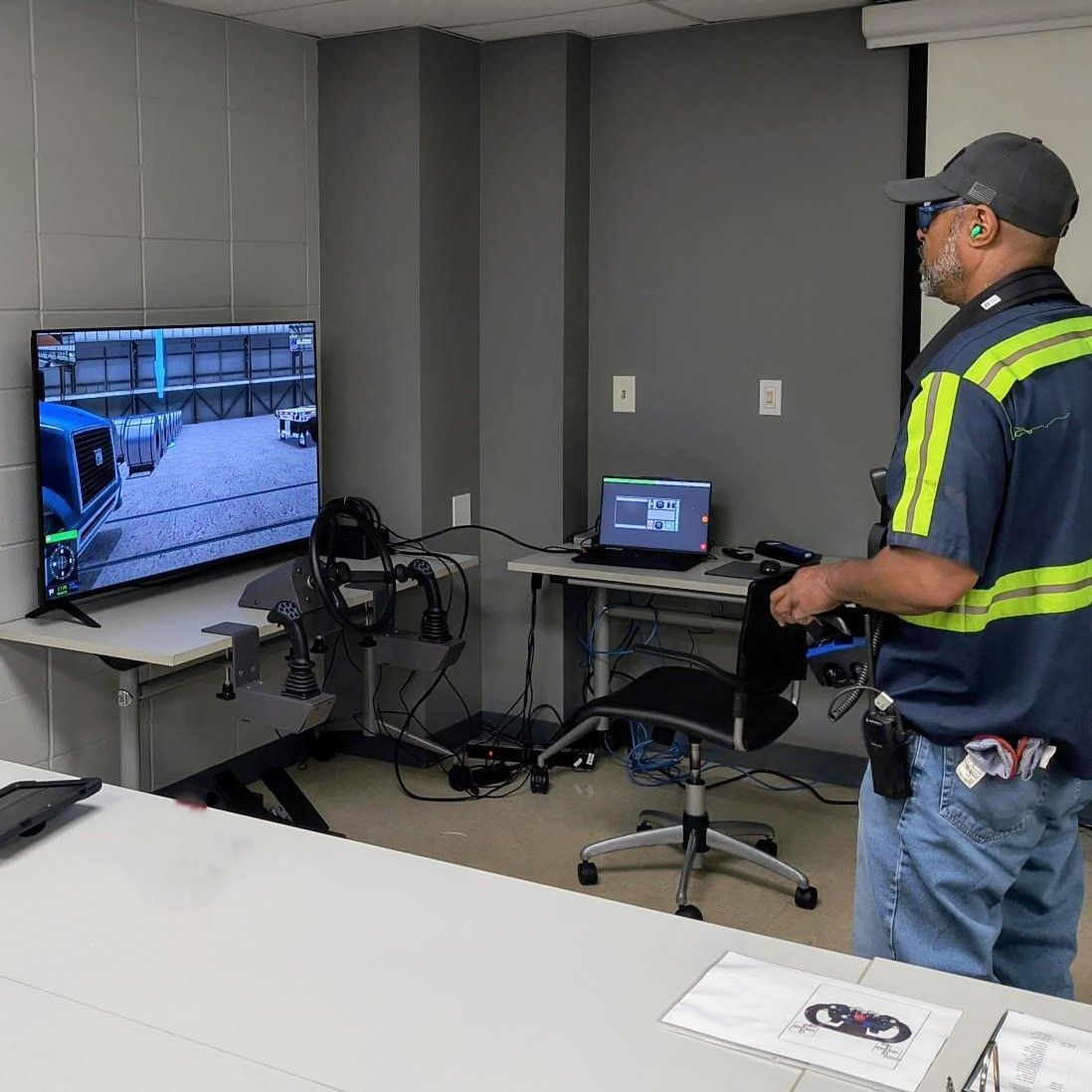
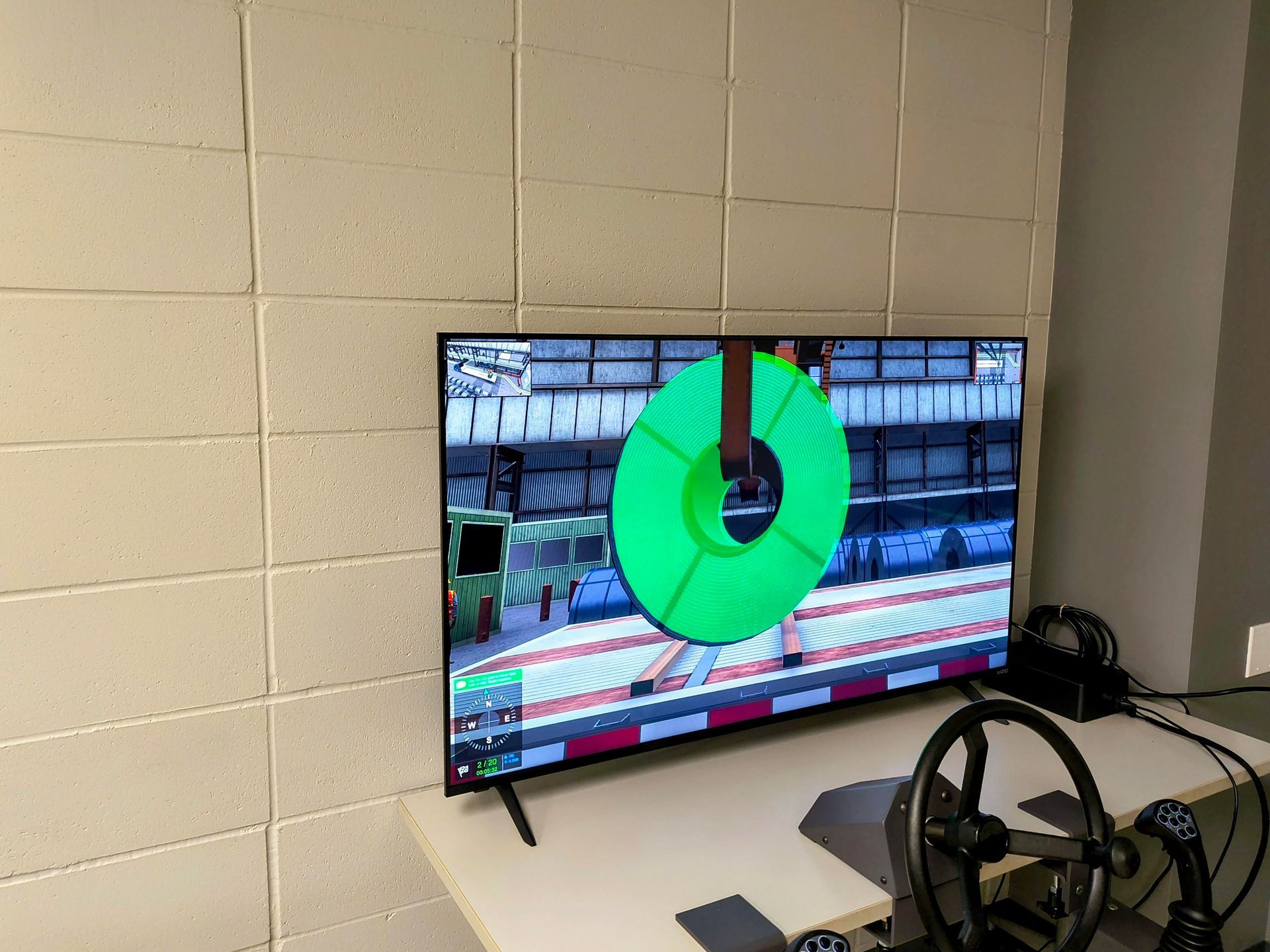
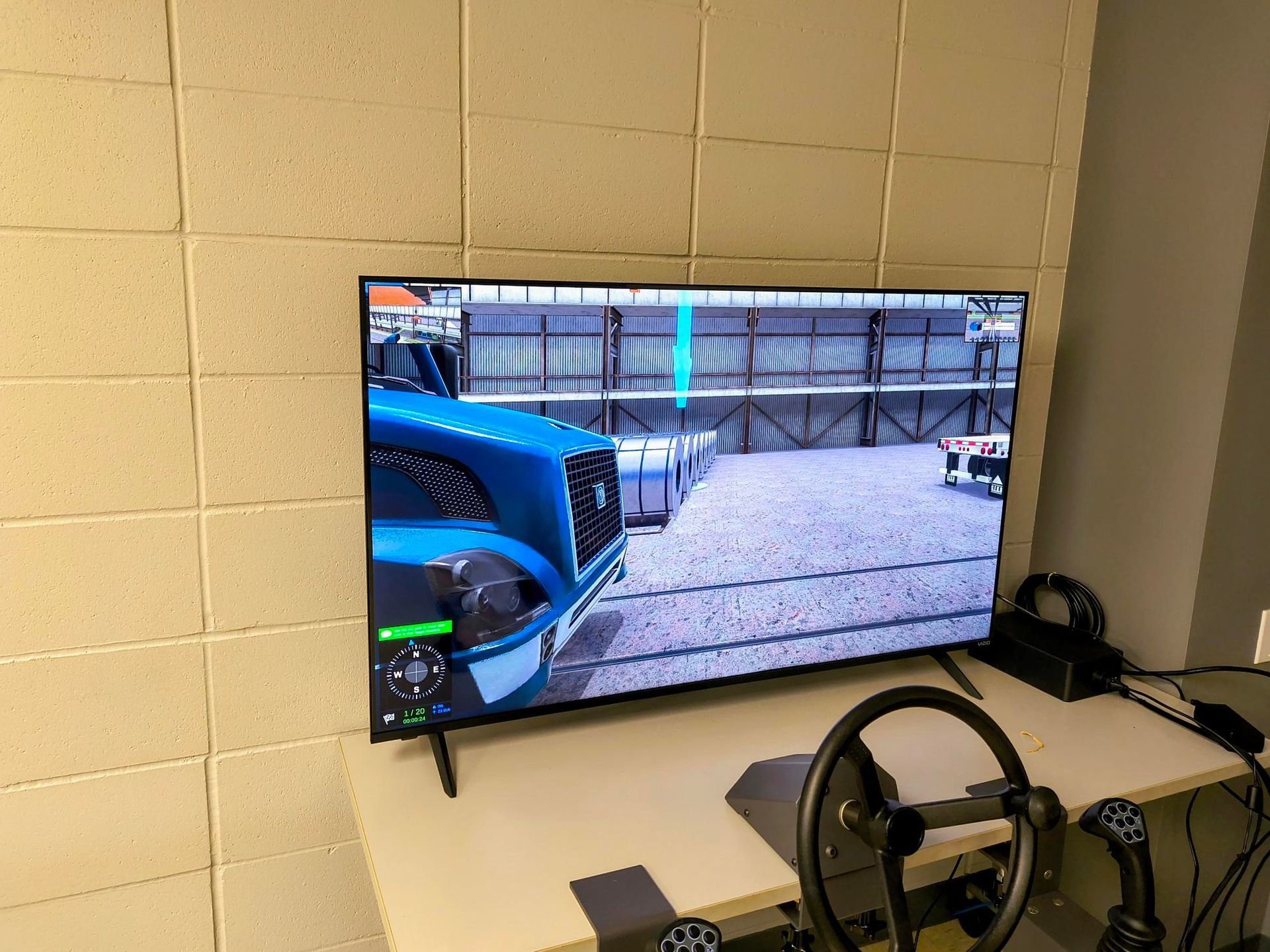
One of the program’s advantages was that it didn’t require a traditional VR headset. Instead, the training is displayed on a 55-inch television and uses a crane “belly box”—the controls an operator uses to operate the crane—to create a hands-on training experience.
Practice Without the Production Pressure
Users log into the system as trainees and work through the modules at their own pace. The program tracks their performance and assigns scores. Trainees need to earn a certain number of points before they’re able to move to the next module.
The scenarios are designed to challenge operators and reinforce safe practices. For example, if an trainee moves a load over a simulated person, the program immediately identifies the safety violation and locks the session until it is restarted.
In other words, team members can fail safely.
Users can make mistakes, see what went wrong and try again without the lift-threatening consequences that could come with making the same mistake in a live work environment.
“The program allows the trainee to operate controls without the production pressure to do it quickly,” says Robert Erion, Operational Excellence Manager and Safety Manager. “That extra time to think is an important part of the training. They can focus on learning how to position themselves, operate the controls and understand where the load is going without worrying about keeping up with production demands.”
It Feels Like the Real Thing
The simulation is designed to feel as realistic as possible. As users move material, the program incorporates movement and other features that make the experience feel like they are actually operating a crane and moving a load.
Ron Clark, a Senior Crane Operator, was one of the first to try the program and provide feedback.
His reaction? “It feels like I’m actually operating a crane,” he said.
That realism is one of the program’s biggest benefits. Trainees aren’t simply watching a video or answering questions, they’re actively operating the controls and responding to situations they may encounter on the job.
Review, Learn and Try Again
The training also gives the team an opportunity to review their performance. Robert can watch training sessions, record the session data and save it for future review. Trainees can look back at their sessions to see what they did correctly and identify areas where they can improve.
That feedback is already making a difference.
Two teammates are currently going through the training, and both have responded positively to the program. Their scores have continued to improve with each session, and they are learning how to better position themselves so they can see where a load is going.
Robert reminds us that, “The goal isn’t simply to get a passing score. It’s to build better habits through practice.”
Training That Doesn’t Interrupt Production
Another advantage of the program is that it can be completed without interrupting production. The training takes place twice a week in the Quality Training Room, which is equipped with a laptop, software, the crane controls or “belly box,” and a tablet used to log training and track progress.
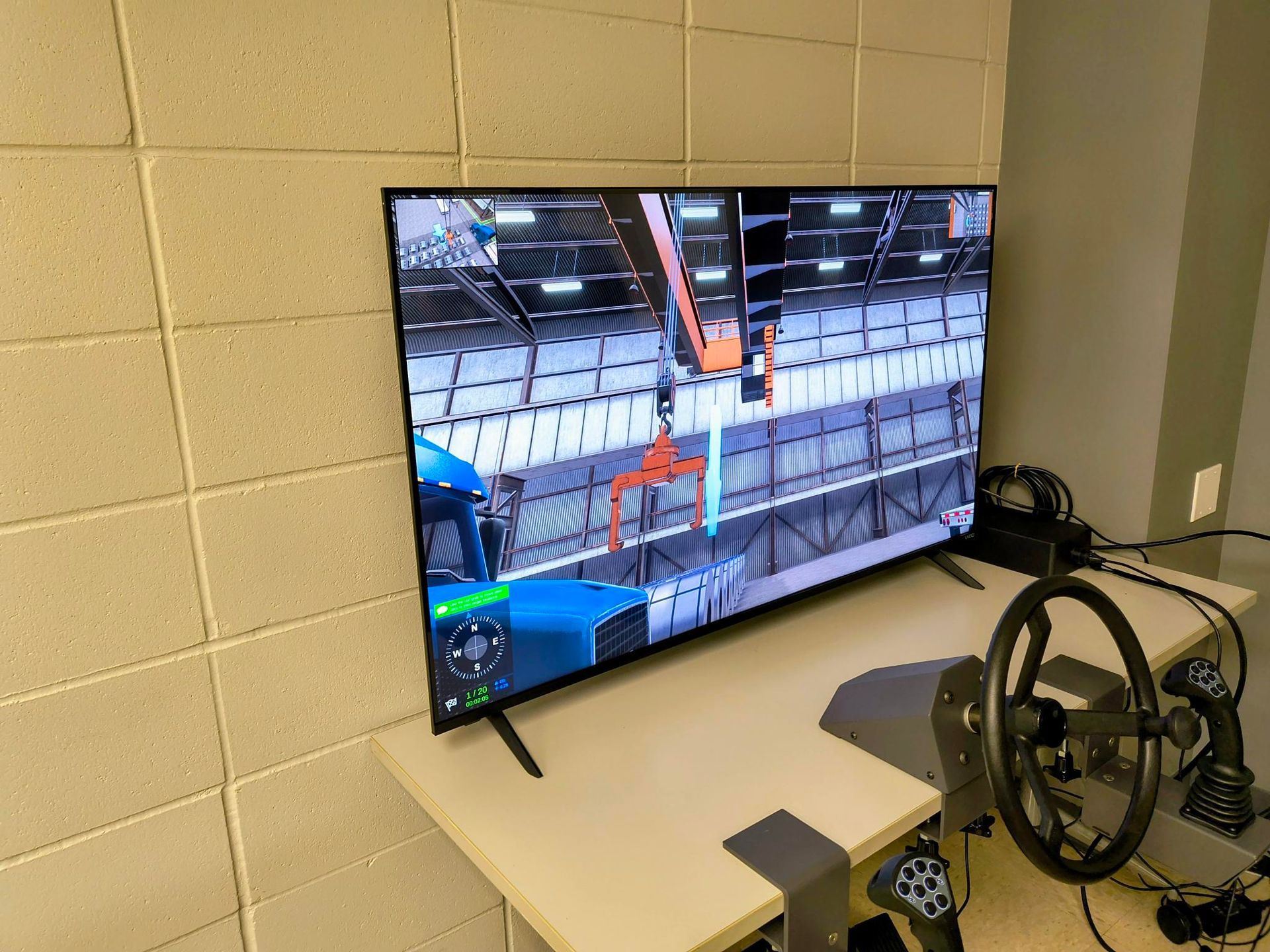
The current plan is to continue expanding the program, with the long-term goal of having all crane operators participate. Teammates can also begin their training in the simulator while shadowing a crane operator and learning other aspects of the job on the production floor. This combination of hands-on experience and simulated practice can help them build familiarity before they take on more responsibilities.
What’s Next?
The current program includes training modules for cranes. The Minneapolis team has been using these modules for about 45 days. Next, the team would like to expand the VR training program to include the forklift modules.
As the program grows, the goal is to give more team members an opportunity to practice their skills in a safe, controlled environment before those skills are put to the test on the production floor.
Virtual training can’t replace hands-on experience, but it can be a valuable part of the learning process. It gives trainees time to practice, make mistakes, review their performance and try again.
And perhaps most importantly, it gives them the opportunity to fail safely while they learn.
Have Questions?
If you have questions about the virtual reality crane training program, please reach out to Robert Erion at Robert.Erion@olysteel.com.
